Stand among the brick sidewalks of downtown Dallas’s West End neighborhood and close your eyes. You can almost hear the clip clopping of horseshoes, hiss of steam-powered trains, and shouts of early settlers. Before chic restaurants and galleries colonized this corner of Dallas, seven generations of Dallasites called the West End home.
Drive down St Mary’s Street and you’ll discover red-brick warehouses and historic plazas that share stories of war and peace, tragedy and rebirth. Whether you’re a Dallas local or wide-eyed traveler, an afternoon spent wandering Dallas’ historic West End will connect you to Texas’ sordid past and show you how Dallas transformed from a small fort town on the Trinity River into America’s 9th largest metropolitan city.
West End History
So exactly when did Dallas become a bustling epicenter for manufacturing and shipping? It was actually with the arrival of two of America’s largest railways. The Houston and Texas Central Railroad arrived in July 1872. The Texas and Pacific Railway would follow just months later. The corner of Houston and Pacific became Dallas’ first major rail intersection and would help foster the growth of the west end into a busy manufacturing and shipping district practically overnight.
Dealey Plaza — Birthplace of Dallas
Arguably the most famous square footage in Texas, Dealey Plaza was where President John F. Kennedy was assassinated on November 22nd, 1963. Visitors from around the globe flock to this plaza to reflect on that tragic day in American history, but few realize they’re also standing where Dallas was born. Commissioned by Dallas civic leader George Bannerman Dealey, the plaza opened as a tree-lined gateway designed to welcome visitors entering Dallas from the west. You’ll notice that the grassy knoll and large concrete peristyles are designed with 1930’s architecture in mind. The historic buildings that make up Dealey Plaza clash with the modern skyscrapers that surround it and stretch toward the Texas blue.
As you walk through Dealey Plaza, imagine yourself sitting in a packed passenger car on November 22nd, 1963. After decades of preservation efforts, Dealey Plaza looks exactly how it did that afternoon. Make sure to walk through the grassy knoll and pause for a moment to remember John F. Kennedy. While at the plaza, take a few minutes to really soak in how Dealey Plaza served as Dallas’ doorstep. Literally, yards from where Kennedy was killed is where the first buildings in Dallas were built. When you stand near the triple underpass, you’ll see for yourself how Dallas transformed from a wild western frontier town to a major industrial center.
Sixth Floor Museum at Dealey Plaza
Atop Dealey Plaza is the old Texas School Book Depository. Built in 1901, this imposing seven-story building of brick is now home to one of the most famous museums in the world. Inside, The Sixth Floor Museum at Dealey Plaza chronicles the life, death, and legacy of President Kennedy. From historic photographs and multi-media exhibits to never-before-seen artifacts, the museum displays an unbiased view of American politics in the early 1960s and recreates the timeline of that tragic weekend.
Explore the sixth floor of the museum and see where the shots were fired from overlooking Elm Street below. If you’re a history buff like me, you’ll love how the Sixth Floor Museum takes you back in time and places Texas in the middle of the Cold War. Filled with incredible history and life-like reenactments, the Sixth Floor Museum at Dealey Plaza is a lesson in preservation and how one moment in time changed the course of history for not only our great nation but for citizens all over the world.
The Old Red Courthouse
Adjacent to Dealey Plaza is a building nearly every Dallasite recognizes from random Texas architectural textbooks. The Old Red Courthouse was built in 1892 using bold colors of red Pecos sandstone and cream limestone. The Old Red Courthouse is by far one of the most photographed buildings in Dallas because it is Dallas. Carved gargoyles, towering arched windows, and a clock tower that seems to stretch towards eternity are just a few features this incredible building has to offer.
The Old Red Courthouse dominated Dallas for as long as we’ve kept physical records. The inside of the building has been restored to showcase incredible detailing from ceilings to fireplaces. While once the literal and figurative heart of Dallas County government, it now houses cultural exhibits that honor Dallas’ judicial history. This iconic Dallas landmark has survived fires, floods, and eager urban developers. It stands today as a reminder of where we came from and a symbol of pride every Dallasite can cherish.
The John Neely Bryan Cabin
Parking yourself next to the Old Red Courthouse will lead you to a shockingly small building made of weathered logs. The John Neely Bryan Cabin was constructed as a tribute to the land’s original owner, who built a small cabin in this exact location in 1841. Twenty-eight-year-old lawyer John Neely Bryan came to Dallas from Tennessee and settled on this high bluff along the banks of the Trinity river. He established Dallas as a permanent trade center, realizing Indian tribes who lived along the river would also allow pioneers to settle there and trade.
The original cabin was lost to age and natural disasters over the decades. The current cabin on display was built using period-accurate logs to replicate the footprint of the original cabin built by Bryan over 175 years ago. Stand in awe of the small windows peeking into the one-room cabin and remember just how difficult life was for the earliest Texans. Remember that beneath the skyscrapers, traffic, and bustling city life is Dallas’ founding father staring up at you from a humble one-room log cabin.
Historic Warehouse District
If you want to understand how Dallas became a household name in commerce, stroll down the streets flanked by rows upon rows of brick warehouses. The Historic Warehouse District of downtown Dallas served as the manufacturing and shipping hub for the entire southwest. Why were merchants from all over America flocking to Dallas in such large numbers? Dallas is where the future came to be stored. Enterprise such as the Moline Plow Company and Rock Island Plow Company constructed multi-story brick buildings to store their farm equipment, dry goods, and groceries that were arriving daily by train.
You will notice that most of the buildings lining Houston Street and St. Mary’s have similar architectural features. Heavy timber framing, large multi-paned windows, and brick corbeling were the styles used to construct these majestic buildings. After serving as an industrial park for decades, developers converted unused warehouse space into boutique shops, restaurants, and nightlife. Driving or walking past these buildings lets you feel what it would have been like to watch Dallas transform from a small western outpost into the commercial empire it is today.
Tip: Make the Most Out of your Historic Walking Tour
- Wear comfortable shoes. The brick streets are beautiful but can be bumpy.
- Start your day early. This gives you time to visit the outdoor exhibits like Dealey Plaza and the John Neely Bryan Cabin before Texas heat skyrockets.
- Visit multiple sites. Since the Old Red Courthouse, the Bryan Cabin, and Dealey Plaza are only a couple blocks away from each other, there’s no need to move your car!
Wrapping It All Up
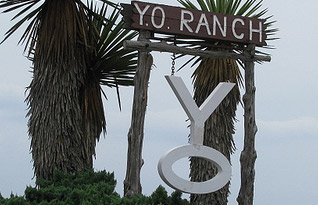
One of the best things about Dallas is its commitment to protecting our past. The Dallas West End has successfully maintained its historic integrity while developing a community focused on culinary discovery and cultural arts. After a day of walking through famous historic plazas, gawking at 19th-century craftsmanship, and pondering the trials and tribulations that shaped our country, you’ll work up an appetite. There’s no better way to experience TRUE Texas hospitality than by coupling your West End historic landmark tour with a night at Y.O. Ranch Steakhouse.
Now Kick Back and Relax at Y.O. Ranch Steakhouse
Finish your stroll through downtown Dallas’ west end by enjoying an award-winning meal at Y.O. Ranch Steakhouse. Built inside a restored 1800’s brick building with hand-shucked brick and original wood floor joists, our dining room pays homage to Texas Elegant themes found throughout the West End. We offer some of the finest steak in the country as well as an extensive selection of wild game harvested straight from the famous Y.O Ranch in the Texas Hill Country. Hosting a last-minute corporate meeting? Looking for a place to celebrate that special occasion? Our team of friendly professionals is dedicated to providing you and your guests with unparalleled service and a dining experience you will never forget. Stop by and see for yourself why Texas hospitality is legendary!
FAQ
Q. How can I see all the historic Dallas West End Landmarks?
A: By car. Some of the locations mentioned here are only a few blocks away from each other. We recommend walking since you’ll discover hidden gems along the way. Don’t forget to wear comfortable shoes!
Q. Will I be able to go inside the historic buildings?
A: Many of them! The Sixth Floor Museum at Dealey Plaza and The Old Red Courthouse both offer tours of the inside of the buildings. You can also visit outdoor landmarks like Dealey Plaza and the John Neely Bryan Cabin at anytime.
Q. Why are so many buildings in the Dallas West End red brick?
A: Trade. When Dallas began booming with industrial development in the late 1800’s and early 1900’s merchants moved their goods here to be stored and distributed. Warehouses were typically build with heavy timber framing and red brick for durability.